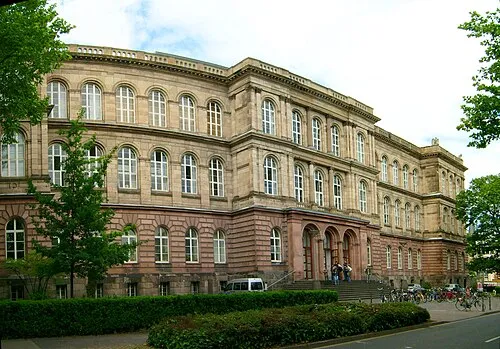
Master
English
Engineering
Computer Engineering
Master

About the Program
The subject of Computer Engineering deals with the architecture, design, realisation, evaluation and operation of computer, communication and embedded systems. The focus is particularly on aspects of hardware and system-related software. Algorithms and other functionalities can usually be realised – depending on the system requirements – as software solutions on general computer architectures, as digital hardware solutions or also implemented in a mixed form of hardware and software components. The Master's programme prepares graduates for challenging jobs in industry and business and lays the foundation for a high level of professional mobility in the dynamic and changing field of computer engineering. The technical focus is on digital hardware, systems theory, systems-related software and algorithmic skills. Students are guided towards a scientific approach to problem solving. In addition, they are prepared for practical activities in projects and in teams. As experts, they are thus optimally equipped for a successful professional life, e.g. in development departments in industry or in research and science. The "start-up culture" necessary for entrepreneurial development and, if applicable, basic competences relevant for this are also to be imparted to interested students. The new Master's programme in Computer Engineering is unique among German TU9 universities. It combines four focal points: digital computer hardware, system-related software, algorithms and information and communication technology. Graduates are thus able to integrate, apply, analyse and evaluate all components of the overall system. The interdisciplinary environment at RWTH Aachen University offers many opportunities to deal with applications and basic technologies of computer systems. In addition, the degree programme also provides insights into future basic technologies (e.g. neuromorphic hardware, quantum information technology), especially in the context of final theses, as well as "looking beyond one's own nose" into neighbouring disciplines, for example, in the context of elective or optional courses.
▶ Show the original English text
The subject of Computer Engineering deals with the architecture, design, realisation, evaluation and operation of computer, communication and embedded systems. The focus is particularly on aspects of hardware and system-related software. Algorithms and other functionalities can usually be realised – depending on the system requirements – as software solutions on general computer architectures, as digital hardware solutions or also implemented in a mixed form of hardware and software components. The Master's programme prepares graduates for challenging jobs in industry and business and lays the foundation for a high level of professional mobility in the dynamic and changing field of computer engineering. The technical focus is on digital hardware, systems theory, systems-related software and algorithmic skills. Students are guided towards a scientific approach to problem solving. In addition, they are prepared for practical activities in projects and in teams. As experts, they are thus optimally equipped for a successful professional life, e.g. in development departments in industry or in research and science. The "start-up culture" necessary for entrepreneurial development and, if applicable, basic competences relevant for this are also to be imparted to interested students. The new Master's programme in Computer Engineering is unique among German TU9 universities. It combines four focal points: digital computer hardware, system-related software, algorithms and information and communication technology. Graduates are thus able to integrate, apply, analyse and evaluate all components of the overall system. The interdisciplinary environment at RWTH Aachen University offers many opportunities to deal with applications and basic technologies of computer systems. In addition, the degree programme also provides insights into future basic technologies (e.g. neuromorphic hardware, quantum information technology), especially in the context of final theses, as well as "looking beyond one's own nose" into neighbouring disciplines, for example, in the context of elective or optional courses.
Which Professions Does This Program Open Up?
Related profession searches from Bundesagentur für Arbeit (BERUFENET) data:
Explore all professions →Subjects / Topic Areas
Electrical Engineering
Similar Programs
Mechatronik
Technische Universität Darmstadt
Master of Science (M.Sc.)
Energie- und Verfahrenstechnik
Rheinland-Pfälzische Technische Universität Kaiserslautern-Landau
Master of Science (M.Sc.)
Mechanical Engineering
Leibniz Universität Hannover
Master of Science (M.Sc.)
Civil Engineering – Structural Engineering Track
Leibniz Universität Hannover
Master of Science (M.Sc.)
Energy Management and Energy Engineering
Technische Hochschule Nürnberg Georg Simon Ohm
Master of Engineering (M.Eng.)
Mechanical Engineering
Hochschule Bonn-Rhein-Sieg
Master of Engineering (M.Eng.)
How do I apply to Computer Engineering at RWTH Aachen University?
Most international applicants apply via uni-assist (document verification + APS for some countries). Prepare your secondary/Bachelor diploma, transcripts, language certificate (DSH/TestDaF or IELTS/TOEFL), motivation letter and CV. Non-EU students also need a Sperrkonto (~11,904 EUR/year) for the visa.
- Check requirements — Verify your degree is recognised + meet language/grade thresholds.
- Get language certificate — TestDaF / DSH for German programmes, IELTS / TOEFL for English.
- Submit via uni-assist (non-EU) — Document review + APS if your country requires it (China, India, Pakistan, Vietnam, etc.).
- Apply directly or via uni portal — Some universities accept direct applications — check the official programme page.
- Open Sperrkonto + apply for visa — After admission, deposit 11,904 EUR, get health insurance, book embassy appointment.
Frequently Asked Questions
Quick answers about Computer Engineering at RWTH Aachen University
Is Computer Engineering at RWTH Aachen University taught in German or English? ▼
This Master programme is taught in English. Make sure to check the language requirements (e.g. TestDaF, DSH, IELTS or TOEFL) before applying.
How much does the Computer Engineering programme cost? ▼
No tuition fee (only semester contribution). International students should also budget around 800–1000 EUR/month for living costs in Germany.
What are the admission requirements for Computer Engineering at RWTH Aachen University? ▼
Typical requirements include: a recognised secondary/undergraduate degree, proof of language proficiency (English), and (for non-EU applicants) a uni-assist application plus financial proof (Sperrkonto ~11.904 EUR/year).
When is the application deadline? ▼
Application deadlines vary: winter semester usually closes on 15 July, summer semester on 15 January. Always confirm the exact deadline on the official university website.
Can I work in Germany while studying Computer Engineering? ▼
Yes. International students may work up to 140 full days / 280 half days per year without additional permission. After graduation you can apply for an 18-month job-seeker permit.
How do I apply to RWTH Aachen University — directly or via uni-assist? ▼
Most German universities accept international applications through uni-assist for document verification. Some unis accept direct applications — check the programme page on the official site.