

Hochschule für Fernsehen und Film München
For Turkish students looking to step into the world of film and television in Germany, Munich stands out not just for its historic beauty, but also for its prestigious educational institutions. Hochschule für Fernsehen und Film München (HFF München), a long-established public film school supported by the state of Bavaria, has been training talented professionals for the cinema and television industry since 1966. With around 400 students, HFF München offers a boutique, hands-on education and is considered one of Germany's most respected film schools. In Munich's vibrant art and culture scene, students get the chance to solidify their theoretical knowledge and develop practical skills through projects. As communities like the "German Film Sharing Group" show, film art holds great interest among Turkish students, and HFF München provides an ideal environment to nurture this passion.
Quick Facts
- University Name
- Hochschule für Fernsehen und Film München
- City
- München
- State
- Bayern
- Type
- Künstlerische Hochschulen (Art University)
- Sponsor
- öffentlich-rechtlich (Public Law Entity)
- Founding Year
- 1966
- Number of Students
- 398
- Number of Available Programs (per DB)
- 3
- Official Website
- http://www.hff-muc.de
- HRK Member
- Evet
- Uni-Assist Member
- Hayır
Get to Know HFF München: Where Art Meets Technology
Hochschule für Fernsehen und Film München, as one of Germany's most established and respected film schools, offers students comprehensive education in cinema, television, and media. Being a state-supported institution means you can get a high-quality education with low tuition fees. The school offers a wide range of specializations, from screenwriting to directing, cinematography to editing, allowing you to delve deep into your own areas of interest. HFF München places great emphasis on practical training, giving you the chance to work with cutting-edge equipment and participate in real-world projects. Munich boasts a rich academic landscape, not just with large universities like "TU München" and "LMU München," but also with art academies like HFF München. This offers you opportunities to interact with different disciplines and engage in cultural events. For film art enthusiasts, this is a starting point where you can turn your dreams into reality.
Estimated Monthly Cost of Living in Munich
Being a Student in Munich: Where Art and Life Intersect
Munich, the capital of Bavaria, is one of Germany's most livable cities and stands out for the opportunities it offers students. As a student at HFF München, you'll find artistic inspiration not just in classrooms, but in every corner of the city. Munich is home to numerous museums, galleries, theaters, and cinemas. The city's green spaces, especially the Englischer Garten, offer great opportunities to relax and socialize between classes or on weekends. Munich's international atmosphere also allows you to meet students from different cultures and build a global network. Plus, film festivals and industry events in the city give you the chance to connect with the professional world early on. Being a student in Munich means not just getting an education, but also experiencing a rich cultural life.
Places to Visit and Student Hangouts
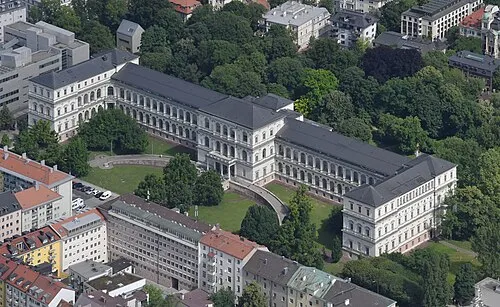
The heart of film education with modern architecture and state-of-the-art studios.
Details ↗Three large museum complexes showcasing art from different periods, ideal for artistic inspiration.
Details ↗One of Europe's largest city parks, a great place to relax, exercise, and socialize.
One of the world's largest museums of science and technology; sections on visual and auditory technologies might be interesting for film students.
Details ↗Munich's central square, the heart of the city with historic buildings and the Glockenspiel.
Student Life and Culture
Student life at HFF München revolves around creativity, collaboration, and passion. Thanks to the small student body, a strong community and family-like atmosphere develops among students. Classes are typically project-based, allowing students to work closely together and gain experience in every stage of filmmaking. Film screenings, workshops, and meetings with industry professionals held on and off campus contribute to students' academic and social development. Munich's vibrant art scene offers students many opportunities to participate in cultural events and showcase their own projects. Film festivals and local cinemas are important resources for students to follow current productions and find inspiration. Studying at HFF München means not just earning a degree, but also building lifelong connections with future filmmakers and media professionals.
- Creative and collaborative project-based education
- Small class sizes and a strong student community
- Opportunities for direct interaction with industry professionals
- Benefit from Munich's rich cultural and artistic environment
- Participation in film festivals and special screenings
Frequently Asked Questions
Do Turkish companies in Germany comply with labor and overtime rules? ▼
All companies operating in Germany, regardless of their nationality, are subject to German labor law. These laws clearly define working hours, overtime pay, and other employee rights. Therefore, it's a legal obligation for all employers, including Turkish companies, to comply with these rules.
I received conditional admission for German language. Which visa type (40f/36f) should I apply for, and is my language level (A2/B1) sufficient? ▼
For conditional admission based on German language, you typically apply for visa type 16f (formerly 17f). However, visa types and codes can change, so it's important to check the official websites of the German Consulate or Goethe-Institut for the most current information. Regarding language level, A2 is generally not considered sufficient for a visa. Most consulates require at least a B1 level of German for a student visa. Even at an art school like HFF München, a B1 or higher level will be a big advantage for German classes and daily life, helping you adapt. It's recommended to reach a B1 level to reduce the risk of rejection.
Which bank do you recommend for a blocked account (Sperrkonto)? ▼
For opening a blocked account (Sperrkonto) in Germany, specialized services like Fintiba and Coracle offer popular and fast solutions. Traditional banks like Deutsche Bank also provide this service, but their processes might take longer. When choosing, you should consider transaction fees, opening time, and customer service. The consulate usually doesn't mandate a specific bank; what matters is that the account meets the blocked account requirements.
I received full admission from the university, can I still take a language course? ▼
Yes, even if you've received full admission from a university, you can still attend language courses to improve your language level or strengthen your academic German skills. Some universities might even offer language courses as part of their support programs for international students. For the most accurate information on this, you should contact the international student office (Akademisches Auslandsamt) at the university you've been admitted to.
Is an A1 German certificate mandatory for a visa application to Germany? ▼
For student visa applications, an A1 German certificate is usually not sufficient. If you haven't received conditional admission and plan to start university directly, a B1 or B2 level of German is generally required. For a language course visa, A1 might be sufficient in some cases, but this can also vary based on the consulate's current regulations. It's critically important to check the official website of the German Consulate for the most up-to-date and accurate information.
Are there preparation courses for the TELC C1 Hochschule exam? ▼
Yes, many language schools and course centers in Germany and Turkey offer preparation courses for the TELC C1 Hochschule exam. Especially in major cities (like Istanbul, Ankara, Izmir), Goethe-Institut branches or private language schools provide options. In Germany, university language centers or private language schools can organize such courses. You can also find many preparation materials and courses on online platforms.
Take the first step to turn your dream of studying film and television at HFF München into reality! Visit the official website to access detailed program information and learn about the application processes.
Community Discussions about Hochschule für Fernsehen und Film München
Source: DeutschStudent-
TU München offers direct admission with B2 Telc.
state26,11113 replies -
Telc C1 Hochschule certificate
german16,59817 replies -
German Film Sharing Group [Main Topic]
chat21,79912 replies
These threads come from an external source (community.deutschstudent.com). To join ApplyToGerman (AlmanyaUni)'s own forum visit /forum.
Hochschule für Fernsehen und Film München — Images
Programs
Useful Links
Location

Programs & Departments
3 active programs · 0 English · 0 NC-frei
Other (1)
Unknown (2)
Cinematography
OTHERThe Cinematography program at HFF focuses on the art and technology of film camera work. Students learn comprehensive knowledge of film camera technologies while developing aesthetic competence as art...
View details →Digital Effects
OTHERThe Digital Effects (VFX) chair at HFF Munich focuses on teaching students the fundamentals of visual effects for film. Students learn about visual effects services, creation processes, associated cos...
View details →
Munich
State: Bavaria
Study Opportunities and Universities
As one of Germany's leading centers for science and research, Munich offers Turkish students 586 different program options across its 19 universities...
more →Life and Student Life in Munich
Munich, nestled in the heart of Bavaria, is a unique city where traditional German culture blends with modern urban life. Its proximity to the Alps of...
more →Student Life and Culture
Munich is one of Germany's most dynamic student cities. Thanks to its large student population, it boasts a vibrant social life. Beyond university-org...
more →More about Munich
Cost of living, housing, transport, student life and all universities.
Student Experiences
Share yours too →No experience shared yet.
Be the first to share an experience about Hochschule für Fernsehen und Film München and help other students.
Share your experienceOther universities in Munich
All →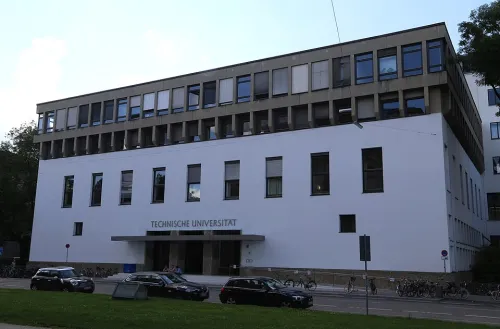 Public
Technische Universität München
55,562 students
 Public
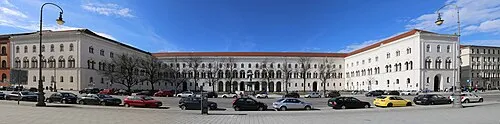
Ludwig-Maximilians-Universität München
53,609 students
 Public
Katholische Stiftungshochschule für angewandte Wissenschaften München
18,535 students
 Religious
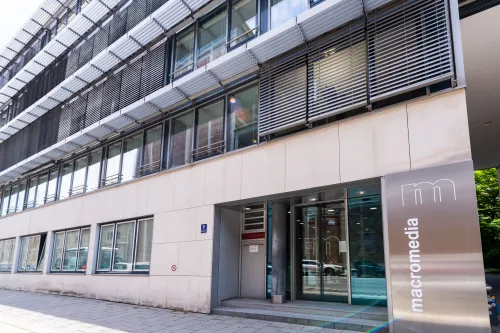
Fachhochschule Macromedia
2,008 students
 Public
Hochschule für Musik und Theater München
1,208 students
 Public
Akademie der Bildenden Künste München
716 students
Student Reviews
Verified reviews from current students, alumni and applicants.
No reviews yet. Be the first!
Verified students and alumni can share their experience below.
Write a review about Hochschule für Fernsehen und Film München Open form ↓
How do I apply to Hochschule für Fernsehen und Film München as an international student?
Non-EU applicants apply via uni-assist (document verification + APS certificate for some countries). EU applicants apply directly. You need a recognised degree, language certificate, motivation letter and CV. After admission, open a Sperrkonto and book a visa appointment at your local German embassy.
- Pick a programme — Browse the programme list above — filter by language, degree, field.
- Verify your eligibility — Check Anabin/APS for your country and degree-equivalence rules.
- Get language certificate — TestDaF/DSH for German, IELTS/TOEFL for English-taught programmes.
- Apply via uni-assist or directly — Submit by 15 July (winter) / 15 January (summer) deadlines.
- After admission: Sperrkonto + visa — Open the blocked account, get health insurance, attend embassy interview.