Max Planck Institute for Extraterrestrial Physics
Max Planck Institute for Physics
The Max Planck Institute for Extraterrestrial Physics (MPE), one of the Max Planck Institutes considered the heart of scientific research in Germany, is globally renowned for its groundbreaking work in space and astrophysics. Located in München, the capital of Bavaria and one of Germany's most popular student cities, this prestigious institute offers unique opportunities, especially for doctoral (PhD) researchers and those aiming for a post-master's career. Rather than a traditional university, MPE focuses on advanced scientific research. While the AlmanyaUni database indicates it offers some Bachelor's and PhD programs or supervision opportunities, its true strength lies in its research-oriented approach. The institute works in close collaboration with established universities like TU München and LMU München, providing students access to a broad academic network. For students considering study in Germany in München, the research environment offered by MPE promises a unique experience, especially for those interested in space sciences. On this page, you'll find information about the opportunities offered by the Max Planck Institute for Extraterrestrial Physics, student life in München, and frequently asked questions about studying in Germany.
Quick Facts
- Institute Name
- Max Planck Institute for Extraterrestrial Physics
- City
- München
- State
- Bayern
- Institution Type
- Public
- Main Focus Area
- Space and Astrophysics
- Programs Offered (according to AlmanyaUni DB)
- Bachelor's (1), PhD (1)
- HRK Membership
- Hayır
- Uni-Assist Membership
- Hayır
Max Planck Institutes and Research-Oriented Education
The Max Planck Institute for Extraterrestrial Physics (MPE) is part of the Max Planck Society, Germany's most respected network of scientific research institutions. Unlike traditional universities, Max Planck Institutes are established to conduct world-leading research in specific scientific fields, rather than having faculties that directly award degrees. As its name suggests, MPE focuses on space and astrophysics research, dedicated to unraveling the mysteries of the universe and beyond. According to the AlmanyaUni database, Bachelor's and PhD programs offered at the institute are typically structured as joint projects with universities or supervised research integrated into the institute's research groups. This offers a unique opportunity, especially for students who want to pursue a scientific career at the master's or doctoral level. The institute provides an international research environment, bringing together scientists and students from all over the world. Since leading universities like TU München are known to offer direct admission with language requirements such as B2 Telc, it's likely that similar language proficiencies will be sought for programs collaborating with MPE. If you're considering studying at such research-focused institutions, it's crucial to carefully check the specific requirements and language proficiencies (usually English or German) for the program you're applying to.
Student Life and Academic Environment in München
München, home to the Max Planck Institute for Extraterrestrial Physics, is one of Germany's most livable and dynamic cities. As the capital of Bavaria, this city stands out not only for its cultural richness and historical fabric but also for its vibrant student population and top-tier educational institutions. The city hosts some of Germany's best universities, such as TU München and LMU München, and MPE is a significant part of this strong academic ecosystem. Being a student in München isn't just about studying; it also means relaxing in huge parks like the Englischer Garten, visiting museums, or socializing in the city's lively cafes. Many questions arise among students regarding life and education in München. For instance, topics like equivalence procedures for mechatronics engineers residing in München are frequently discussed. One of the first steps for new students arriving in Germany is the Anmeldung (registration of residence) process, which in München, like other cities, is done by applying to the local city office (Bürgeramt). The city's transportation network is highly developed, and students can usually travel within and around the city affordably with a Semesterticket (semester public transport ticket). However, the cost of living in München can be above the German average, so budgeting is important.
Monthly Cost of Living (Estimated)
Places to Visit and Student Hangouts
The institute itself, with its modern research facilities, is a hub for scientific work.
One of Germany's top universities, known for its proximity to MPE and its reputation in engineering and science.
Another large and established university in the city, strong in humanities, social sciences, and natural sciences.
One of the world's largest science and technology museums, a must-see for science and tech enthusiasts.
A massive park in the heart of the city, a place for students to relax, exercise, and socialize.
München's historic center and meeting point, famous for the New Town Hall and its Glockenspiel.
Student Life and Culture
Student life at the Max Planck Institute for Extraterrestrial Physics differs somewhat from traditional university campuses. The focus is on intensive scientific research and international collaboration. Being a student here, typically for PhD candidates and post-doctoral researchers, means the opportunity to specialize deeply in your field and work with scientists worldwide. The institute encourages academic interaction by organizing various seminars, workshops, and conferences. The general student culture in München is quite vibrant. The city hosts a large number of international students, which enhances its cultural diversity. Students can expand their social circles by joining sports clubs, cultural events, and student associations in the city. Biking is a popular mode of transport in München, and students often commute to their campuses or around the city by bike.
- Intensive research and scientific focus
- International and multicultural academic environment
- Wide range of social and cultural opportunities offered by München
- Continuous academic development through seminars and conferences
- Biking is widely used for urban transportation
Frequently Asked Questions
Do you know of universities that offer conditional admission for Computer Science programs with B1-B2 German language proficiency? ▼
Many universities in Germany can offer conditional admission (bedingte Zulassung) for certain programs with B1 or B2 level German. This means you'll need to reach a C1 level within a specific timeframe after being admitted. You might find such programs, especially among technical universities and universities of applied sciences. The most accurate information will come from checking the language requirements section on the websites of the universities you plan to apply to or by contacting their student administration (Studiensekretariat) directly.
When filling out the residence permit form, it asks for my health insurance company. I came with an AT11 document; what should I write? ▼
Students arriving from Turkey with an AT11 document can present this document when applying for a residence permit in Germany. The AT11 document indicates an agreement between your social security institution in Turkey (SGK) and the German health insurance system, showing that your Turkish insurance is valid in Germany under certain conditions. When the form asks for the insurance company, stating 'AT11' or 'Turkish Social Security Institution (SGK) / AT11' is usually sufficient. However, transitioning to the German health insurance system or getting additional private insurance is recommended, especially for long-term stays, as the scope of AT11 might differ from German insurance.
What did you write as your departure date on the visa form? Can it be based on your insurance start date? ▼
On the visa application form, you need to write your planned first entry date into Germany as the departure date. This date should generally align with your health insurance start date, as you're expected to provide valid travel health insurance during the visa application. Your insurance policy's start date shouldn't be earlier than your planned entry into Germany or the date you submit your visa application. Typically, the insurance start date is set a few days before the visa application or the beginning of your planned travel date.
Can you recommend an online platform to learn A1 level German? ▼
There are many online platforms available for learning A1 level German. Online courses from the Goethe-Institut, and apps like Duolingo, Babbel, and Memrise are quite popular and effective for beginners. You can also find free lesson videos on YouTube by searching 'Learn German A1'. Platforms offering online private or group lessons (e.g., italki, Preply) can also be a good choice for a personalized learning experience.
I have travel health insurance; should I write yes or no in the health insurance section of the visa form? ▼
If you have travel health insurance, you should write 'Yes' in the relevant section of the visa form and provide your insurance details (company name, policy number, validity dates). For the visa application, it's mandatory to present valid travel health insurance covering at least the first few weeks of your stay in Germany. After arriving in Germany, for a student visa, you'll typically be required to switch to German student health insurance (gesetzliche Krankenversicherung).
My GPA is 2.83, Uni-assist calculated it as 2.7, but when I check with the grade conversion formula and other websites, it comes out as 2.17. What could be the reason? ▼
Uni-assist uses a specific formula, known as the 'Bavarian Formula,' to convert GPAs to the German grading system. Your own calculations or results from different online tools might not exactly match the official formula and methodology used by Uni-assist. Uni-assist's internal guidelines and any additional criteria set by the university for a specific program can also influence the final grade conversion. For the most accurate information, it's helpful to contact Uni-assist directly to inquire about the details of your grade conversion.
Does anyone know which platform is generally used to send money for a blocked account? ▼
Money transfers for a blocked account (Sperrkonto) are typically made through platforms that provide international money transfer services or directly via banks. Popular platforms among students include Wise (formerly TransferWise), Remitly, Xoom (a PayPal service), and Western Union. These platforms can often offer lower transfer fees and better exchange rates compared to traditional banks. Before making a transfer, it's important to check the recommended or partnered transfer methods of the bank where you opened your blocked account (e.g., Fintiba, Expatrio).
Do you need more information to explore the research and education opportunities offered by the Max Planck Institute for Extraterrestrial Physics, experience student life in München, and guide your academic career in Germany? You can browse other universities on the AlmanyaUni platform, join our student community to ask your questions, and get one step closer to your dreams of studying in Germany!
Community Discussions about Max Planck Institute for Extraterrestrial Physics
Source: DeutschStudent-
TU München offers direct admission with B2 Telc.
eyalet26,11113 replies -
Is there an early Anmeldung Termini form in Hannover?
eyalet25,0007 replies
These threads come from an external source (community.deutschstudent.com). To join ApplyToGerman (AlmanyaUni)'s own forum visit /forum.
Max Planck Institute for Extraterrestrial Physics — On the AlmanyaUni Forum
Experiences from our international student community
Programs
Location
Sources
Programs & Departments
2 active programs · 2 English · 0 NC-frei
Bachelor (1)
PhD (1)

Munich
State: Bavaria
Study Opportunities and Universities
As one of Germany's leading centers for science and research, Munich offers Turkish students 586 different program options across its 19 universities...
more →Life and Student Life in Munich
Munich, nestled in the heart of Bavaria, is a unique city where traditional German culture blends with modern urban life. Its proximity to the Alps of...
more →Student Life and Culture
Munich is one of Germany's most dynamic student cities. Thanks to its large student population, it boasts a vibrant social life. Beyond university-org...
more →More about Munich
Cost of living, housing, transport, student life and all universities.
Student Experiences
Share yours too →No experience shared yet.
Be the first to share an experience about Max Planck Institute for Extraterrestrial Physics and help other students.
Share your experienceOther universities in Munich
All →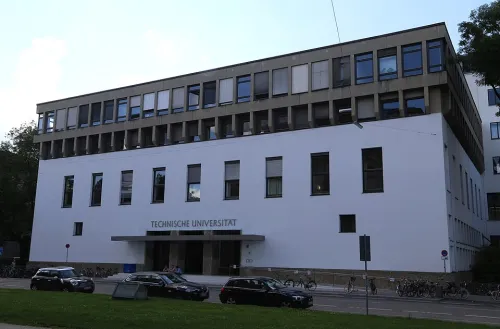 Public
Technische Universität München
55,562 students
 Public
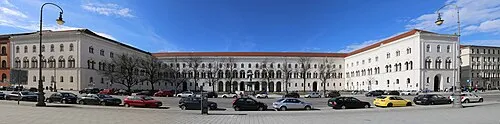
Ludwig-Maximilians-Universität München
53,609 students
 Public
Katholische Stiftungshochschule für angewandte Wissenschaften München
18,535 students
 Religious
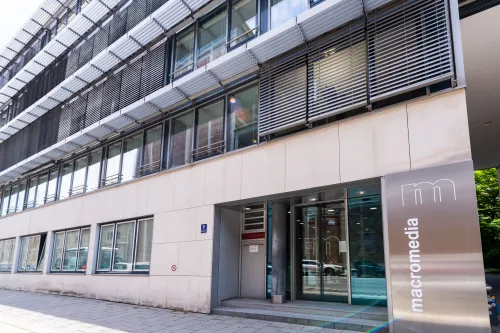
Fachhochschule Macromedia
2,008 students
 Public
Hochschule für Musik und Theater München
1,208 students
 Public
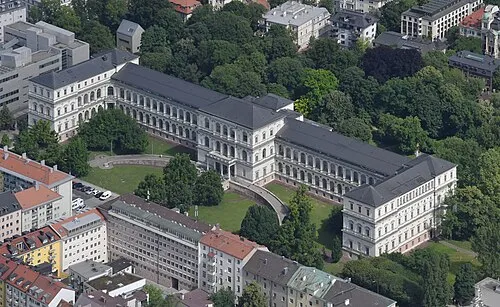
Akademie der Bildenden Künste München
716 students
Student Reviews
Verified reviews from current students, alumni and applicants.
No reviews yet. Be the first!
Verified students and alumni can share their experience below.
Write a review about Max Planck Institute for Extraterrestrial Physics (Max Planck Institute for Physics) Open form ↓
How do I apply to Max Planck Institute for Extraterrestrial Physics (Max Planck Institute for Physics) as an international student?
Non-EU applicants apply via uni-assist (document verification + APS certificate for some countries). EU applicants apply directly. You need a recognised degree, language certificate, motivation letter and CV. After admission, open a Sperrkonto and book a visa appointment at your local German embassy.
- Pick a programme — Browse the programme list above — filter by language, degree, field.
- Verify your eligibility — Check Anabin/APS for your country and degree-equivalence rules.
- Get language certificate — TestDaF/DSH for German, IELTS/TOEFL for English-taught programmes.
- Apply via uni-assist or directly — Submit by 15 July (winter) / 15 January (summer) deadlines.
- After admission: Sperrkonto + visa — Open the blocked account, get health insurance, attend embassy interview.